En esta página
Overloaded Trucks Accidents in Ohio
There are various regulations surrounding commercial trucks, and more than a few focus on size and weight. That is because overloaded and wide-load trucks on U.S. roads present a clear danger. Trucks that are too heavy, too large, and improperly loaded are much more likely to cause accidents than result in devastating injuries.
If you were injured in a truck accident, contact the experienced Ohio truck accident lawyers from Kisling, Nestico & Redick as soon as possible. Working with an attorney who knows the ins and outs of trucking industry regulations is essential to obtaining the maximum compensation. At KNR, we know what it takes to determine if the truck was overloaded and how to make a compelling case for the compensation you deserve.
Call KNR at 1-800-HURT-NOW to schedule a free consultation.
What is a Truck’s Maximum Weight?
Federal law designates how heavy commercial trucks can be based on Gross Vehicle Weight Rating (GVWR). States can also have their own GVWR regulations. However, most allow the maximum GVWR established by federal law. Some allow trucks to have greater weights on non-interstate highways. In limited circumstances, truckers can obtain permits to weigh more than the federal or state law.
Every vehicle’s maximum GVWR is based on the truck’s axles, frame, suspension, brakes, and other features, which are rated by the vehicle manufacturers. There is an allowable GVWR for each axle, and the GVWR for the truck cannot be more than the combined ratings for each axle. However, most regulations call for a maximum weight less than the total figure for all axles. In general, larger trucks with more axles can carry more weight than smaller vehicles with fewer axles.
Trucks also have a Gross Combination Weight Rating (GCWR). To calculate this figure, motor carriers and regulators look at more than the weight of the cab and trailer. They must also add in the weight of the trucker, passengers, fuel, and cargo.
How Heavy Can Truck Loads Be?
Federal truck maximum weight limits are:
- 20,000 pounds for a single axle, which means there is one set of wheels on the trailer
- 35,000 pounds for a tandem axle, which means the trailer has two sets of wheels
- 80,000 pounds gross vehicle weight
- Pounds based on the bridge formula, which is used to protect bridges from too much weight and use.
Ohio truck maximum weight limits are:
- 650 pounds per inch of pneumatic tire
- 20,000 pounds for a single axle
- 34,000 pounds for a tandem axle
- 80,000 pounds gross vehicle weight
At times, a truck may have different maximum weights depending on the formula used. For instance, the GCWR may be higher than the weight allowed by the bridge formula. In this case, the lesser amount applies. Additionally, other factors like the highways the trucker will be using, the truck design, or its registration may require a lighter maximum weight.
Overloaded Truck Accidents
There are weight restrictions on trucks for a reason. Too much cargo on a vehicle greatly increases the risk of a collision. Overloaded trucks usually are not balanced. When a vehicle is not properly balanced, it is hard for a trucker to handle it. An improperly balanced truck is an even more serious hazard in poor weather. It will be more likely to slide, tip, and rollover.
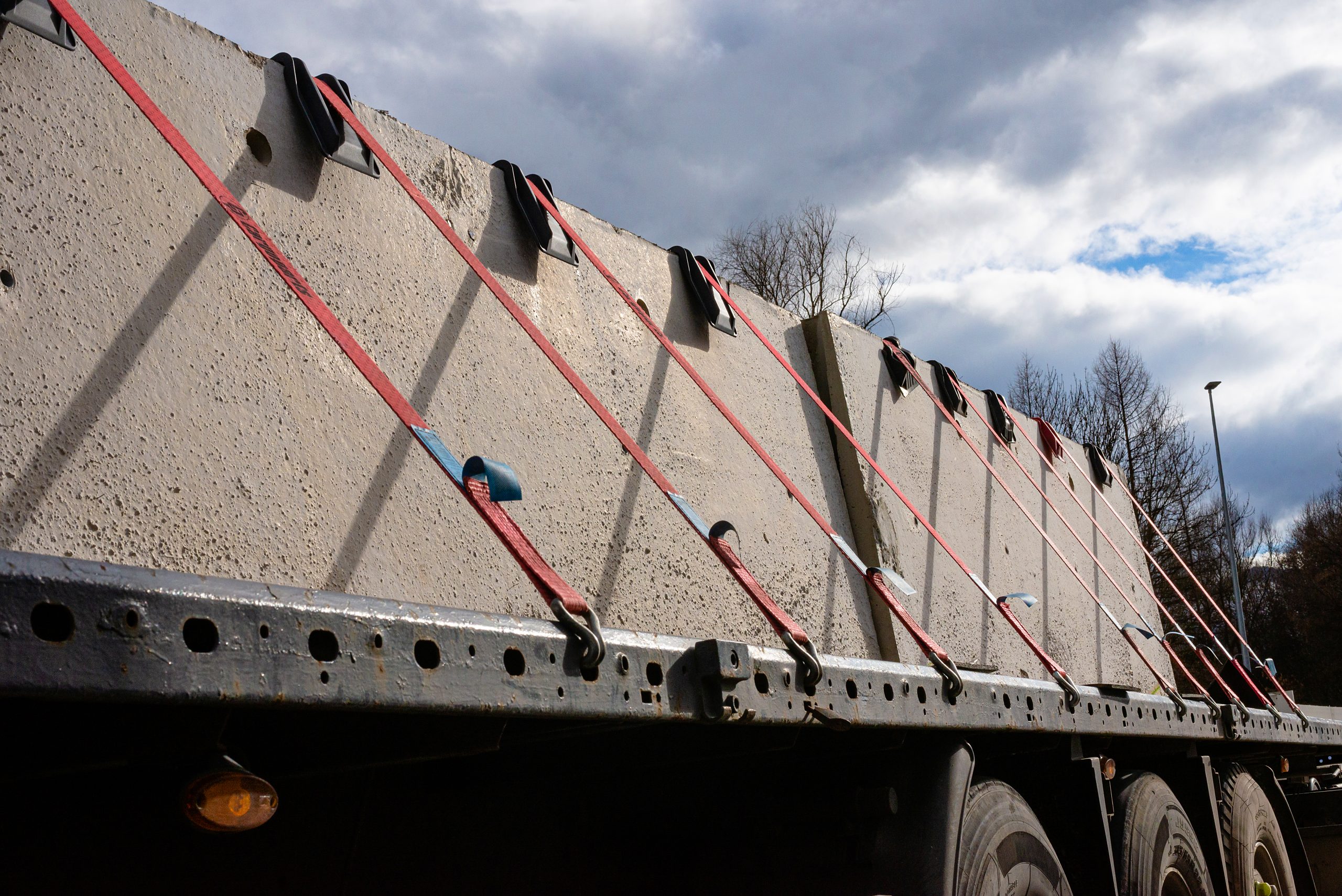
Overloaded cargo is also more likely to move around and shift, particularly if it is not properly secured. If a trucker is not careful, speeding or taking a sharp turn can move the cargo and increase the risk of tipping or rolling over. Too much weight wears down the truck faster. Over time, it could affect the brakes, tires, and other essentials. Additionally, unnecessary weight can significantly increase the truck’s speed on declines, making it more difficult to handle and avoid accidents.
Overloaded trucks are more likely to cause:
- Tipping
- Rollover accidents
- Jackknifing
- Exceso de velocidad
- Runaway trucks or trailers
Truck Size Matters Too
Federal and state regulations do not just look at a truck’s maximum weight, they also consider a truck’s actual size, such as length, width, and height. Truckers and motor carriers have to keep their hauls within a certain size limit, or they need a special hauling permit to travel as an oversized load.
In Ohio, truckers may need a permit to drive on the interstates or U.S. routes, the Ohio turnpike, and roads with weight restrictions. When a trucker is given permission to drive with an oversized load, they must take additional precautions like installing additional hazard signs or lights and driving below the posted speed limit. Ohio law requires a truck with materials overhanging more than four feet from the rear to display a red flag no less than 16 inches square.
Oversized & Wide Load Truck Accidents
Oversized loads take up a great deal of space on public roads, often requiring more than one lane or having to use the shoulder. By taking up extra space, they can disrupt the flow of traffic, even to the point of enabling traffic to only use two lanes instead of three near the truck. These types of loads also cannot move as quickly as other vehicles, which means they may have to move at 15 mph or more under the speed limit. A large, slow-moving vehicle surrounded by faster-moving cars can cause a dangerous situation.
Oversized & Wide Load Trucks Require Special Permits
If you are in an accident with a truck carrying an oversized or extra-wide load, you should work with an attorney to determine whether the trucker and trucking company were operating in accordance with the law. There are regulations dictating when and how an oversized load can travel, and truckers typically must have special permits for loads that are heavier, longer, or wider than normal.
Oversized Vehicles Must Use Warning Flags and Signs
It can be difficult for you to tell from far away that a truck has overhanging cargo or is extra wide. That is why the law requires all vehicles and loads that are oversized to use red or orange warning flags that are at least 18 inches square.
Overly wide trucks must have two flags at the widest parts of the vehicle or cargo and one at each corner. Trucks with cargo overhanging 4 feet or more behind the trailer must have one or two flags on the very end of the cargo, depending on its width. These trucks should also have a sign that displays “Oversize Load.”
Truckers Must Follow the Designated Route
Truckers who are operating under a special permit must follow a designated route listed on the permit. Where the trucker stops for fuel, food, and rest must be addressed on the permit, and they are not allowed to deviate from these plans. If there is an obstacle to following the route, such as construction, the trucker must contact the permit office or law enforcement about this situation and the necessary deviation.
Truckers Must Obey Restricted Hours for Oversized Loads
Unlike trucks carrying cargo within normal weight and size restrictions, oversized and wide loads may be restricted to operating within certain days and times. This is necessary when a truck cannot keep up with normal traffic flow due to its size.
In general, trucks with special hauling permits can operate between daylight hours all week. Daylight hours are considered a half-hour before sunrise until a half-hour after sunset. However, there are several rules that limit the movement of oversized and wide loads even further.
Trucks that are wider than 12 feet cannot operate in a significant number of Ohio counties between 6:30 am and 9:00 am or 4:30 pm and 6:00 pm Monday through Friday. This ensures ultra-wide trucks are not attempting to operate in heavy traffic areas where they are most likely to cause an accident.
These trucks are also prohibited across the entire state from traveling from 3:00 pm on Saturday to a half hour before sunrise on Sunday and from 3:00 pm on Sunday until a half hour before sunrise on Monday. Plus, between April 1 and November 30, loads wider than 12 feet cannot operate from 3:00 pm on Friday to a half-hour before sunrise on Saturday.
Trucks that require a special hauling permit are also prohibited from operating on holidays, including Thanksgiving, Christmas, New Year’s Day, Memorial Day, Independence Day, Labor Day, and Easter. Holidays technically begin at noon the day before and last until half an hour before sunrise the day following the holiday.
There are exceptions to these rules; however, the Ohio Department of Transportation attempts to restrict movement of oversized and wide loads to make roads safer overall.
Oversized Loads Must Stay in the Right Lane
When a trucker is carrying a load that requires a special permit in Ohio, they must remain in the extreme right-hand lane except to pass other vehicles, make left turns, or maintain continuous movement. This means, for the most part, a large truck should remain in the right lane except for brief periods of time.

¿Tienes un caso? Solicita hoy mismo tu evaluación 100 % gratuita