PFAS Contamination & Options for Affected Residents
If you’ve been diagnosed with a related illness linked to Ohio’s water, you may be entitled to compensation. From Cincinnati to Cleveland and every Ohio community in between, KNR’s experienced and passionate mass tort attorneys are here to hold polluters accountable and help victims like you recover everything they deserve.
If you believe your illness is linked to contaminated drinking water, don’t wait. Speak with an experienced Ohio PFAS water contamination lawyer today. Call 1-800-HURT-NOW for a free, no-risk consultation.
There’s no fee unless you win. PFAS and other “forever chemicals” have infiltrated Ohio’s drinking water, exposing countless residents to cancer-causing chemicals. If you’ve been diagnosed with a related illness linked to Ohio’s water, you may be entitled to compensation. From Cincinnati to Cleveland and every Ohio community in between, KNR’s experienced and passionate mass tort and class action attorneys are here to hold polluters accountable and help victims like you recover everything they deserve.
¿Tienes un caso? Solicita hoy mismo tu evaluación 100 % gratuita
Somos abogados galardonados y altamente cualificados
The History of PFAS & Water Contamination in Ohio
For decades, industries and military sites across Ohio used PFAS in firefighting foam and everyday consumer products, contaminating rivers, groundwater, and municipal water systems. These “forever chemicals” didn’t just vanish. They built up in Ohio’s environment and in people’s bodies, leaving a toxic legacy that communities are still living with today.
Ohio PFAS Pollution in Rivers & Local Water Supplies
Ohio has been no stranger to water pollution scandals. The Cuyahoga River catching fire in Cleveland became a national symbol of unchecked industrial waste. Lake Erie’s harmful algal blooms have left entire cities without safe drinking water. Currently, PFAS contamination, often from firefighting foam at military bases and chemical discharges into the Ohio River, represents the newest chapter in a long struggle for clean, safe water.
Timeline of Ohio Water Contamination
1960s-1970s: The Cuyahoga River Burns – Cleveland’s Cuyahoga River became infamous for catching fire multiple times due to unchecked industrial waste. These disasters helped push Congress to pass the Clean Water Act, but the damage to Ohio’s waterways was already severe.
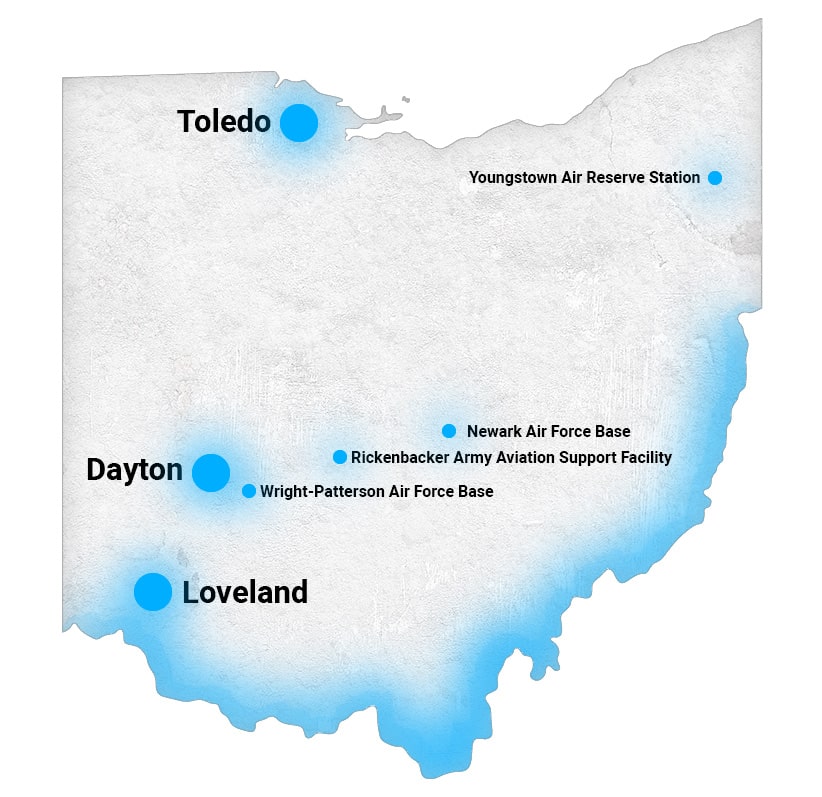
1980s-1990s: PFAS Foam at Military Bases – Across Ohio, PFAS-containing firefighting foam (AFFF) was used for training and emergencies at military installations like Wright-Patterson Air Force Base, Youngstown Air Reserve Station, and Newark AFB. These chemicals seeped into groundwater and spread into nearby communities.
2001: First PFAS Lawsuits Hit the Region – DuPont faced its first major PFAS lawsuit tied to water contamination in Parkersburg, West Virginia, just across Ohio’s border. The case revealed internal documents showing companies knew PFAS were toxic long before the public did.
2014: The Toledo Water Crisis – Nearly 400,000 residents in Toledo were left without safe drinking water for days due to toxic algae blooms in Lake Erie, a reminder of how fragile Ohio’s water supply remains.
2019: Ohio Launches PFAS Action Plan – The state began systematically testing public water systems for PFAS. Results showed contamination in multiple counties, especially near military sites and industrial areas.
2023: Contamination Confirmed in Public Water Systems – Three public water supplies tested above EPA limits for PFAS. Cities like Dayton and Loveland began investing in costly filtration upgrades.
2024: EPA Issues National PFAS Standards – The U.S. EPA set its first enforceable drinking water limits for PFAS. This forced Ohio municipalities to begin costly upgrades, straining budgets and sparking more lawsuits for financial relief.
2025-2026: The Status of PFAS Water Lawsuits
In 2025, a federal judge ordered Chemours to halt illegal PFAS discharges into the Ohio River, Pike Water Inc. sued 15 chemical companies over contamination across six counties, lawmakers introduced the Lead Line Replacement Act to remove toxic pipes, and Loveland secured $1.3 million in state funding to combat PFAS in its public supply.
As of mid-2026, the national firefighting-foam litigation (MDL 2873) that holds many of these personal-injury claims has grown to roughly 23,500 pending cases, making it one of the largest product-liability consolidations in U.S. history. No global personal-injury settlement has been announced, and the first bellwether trial, originally set for October 2025, was vacated and has not yet been rescheduled. Individual claims continue to be filed and worked up while settlement negotiations go on, which is why documenting your exposure and diagnosis now still matters.
Ohioans Are Speaking Out about PFAS Water Contamination
Families in Dayton, Loveland, Toledo, and dozens of other communities are filing lawsuits and demanding accountability from the corporations and agencies that allowed toxic chemicals to seep into their water supplies. These cases are not just about compensation. They are about justice and forcing polluters to take responsibility, acknowledging the harm they caused, and protecting future generations from the same dangers.
Ohio Communities in PFAS Water Lawsuits
Dayton, OH – In 2024, the city committed $11 million to fight PFAS in its drinking water after nearby groundwater tested positive for contamination. City leaders have pledged ongoing monitoring and additional treatment systems to protect residents.
Loveland, OH – In 2025, Loveland received a $1.3 million forgivable loan from the state to address PFAS contamination in its public water system, which serves more than 13,000 people. This funding will help install new filtration technology and prevent future contamination.
Toledo, OH – Still reeling from the 2014 Lake Erie water crisis, Toledo remains a flashpoint in Ohio’s water contamination fight. Residents have continued to press for stricter protections against agricultural runoff and chemical discharges contributing to toxic blooms and PFAS threats.
Pike Water Inc. – In 2025, this regional utility filed a federal lawsuit against 15 chemical companies, alleging that PFAS from manufacturers contaminated its system, which serves six counties. The case has since been consolidated into a national multidistrict litigation (MDL).
Ohio River Communities – In January 2025, a federal judge ordered Chemours to stop illegally discharging PFAS from its Washington Works plant into the Ohio River, a waterway that supplies millions. This case underscores how corporate negligence continues to endanger Ohio families.
If your community has been impacted by PFAS contamination, you don’t have to fight alone. Contact KNR today for a free case evaluation, no fee unless we win.
PFAS (per- and polyfluoroalkyl substances) are a group of human-made chemicals used in everything from non-stick cookware to waterproof clothing and food packaging. Their durability made them popular in manufacturing, but that same quality is what makes them so dangerous.
PFAS are called “forever chemicals” because they do not break down in the environment. Once they enter soil or water, they persist for decades. They also accumulate in the human body, meaning even low-level exposure over time can lead to serious health risks such as cancer, thyroid disease, and immune system disorders.
What are the Most Common “Forever Chemicals” Found in Ohio
PFAS aren’t just one specific substance that can be discontinued or easily avoided. They’re a family of over 12,000 substances. Some are better known, tested more frequently, and more dangerous than others. The most common “forever chemicals” linked to water contamination in Ohio include:
PFOA (Perfluorooctanoic Acid) – Widely used in non-stick cookware, carpeting, and waterproof fabrics. Strongly linked to kidney and testicular cancer.
PFOS (Perfluorooctane Sulfonate) – Common in firefighting foam (AFFF) and stain-resistant products. Associated with thyroid disease and reproductive harm.
PFHxS (Perfluorohexane Sulfonic Acid) – Found in firefighting foam and water-resistant coatings. Known to disrupt hormone and immune systems.
PFNA (Perfluorononanoic Acid) – Used in plastics and food packaging. Linked to liver toxicity and cholesterol issues.
GenX Chemicals – Marketed as a “safer” replacement for PFOA but shown to cause similar health problems, including liver damage and cancer, in animal studies.
These chemicals are especially concerning because they can travel long distances in water, survive for decades, and bioaccumulate inside the human body.
AFFF Firefighting Foam & Military Sites in Ohio
One of the most common sources of PFAS contamination is aqueous film-forming foam (AFFF), a firefighting foam used for decades at military bases, airports, and firefighter training facilities. AFFF contains high concentrations of PFAS that seep into soil and groundwater, spreading long after the foam is used.
In Ohio, contamination has been detected near several military sites, including:
Wright-Patterson Air Force Base (Dayton) – PFAS detected in groundwater near one of Ohio’s largest military installations.
Youngstown Air Reserve Station – Testing has revealed PFAS in groundwater at levels far above the EPA’s enforceable drinking water limit of 4 parts per trillion for PFOA and PFOS.
Newark Air Force Base – Documented groundwater contamination from AFFF use.
Other sites – Airports, training centers, and armories have all contributed to local contamination.
Service members, firefighters, and surrounding communities have been among the hardest hit. Many who lived or worked near these facilities are now facing diagnoses of kidney, thyroid, liver, or testicular cancer, which are illnesses closely linked to PFAS exposure.
PFAS Manufacturers & Products with Forever Chemicals
PFAS contamination in Ohio’s water didn’t happen by accident. It traces back to major manufacturers who produced and sold these chemicals for decades despite knowing the risks.
PFAS Manufacturers Named in Prior Lawsuits
3M – One of the largest PFAS producers, linked to firefighting foam and consumer goods.
DuPont – Made PFAS for decades and supplied them to other companies.
Chemours – A DuPont spin-off, still facing lawsuits for PFAS discharges into rivers.
Corteva – Another chemical company linked to PFAS production.
Everyday Products That Contained PFAS
Non-stick cookware (Teflon pans)
Microwave popcorn bags, fast-food wrappers, and pizza boxes
Stain-resistant carpets and upholstery (e.g., Scotchgard)
Water-resistant clothing and outdoor gear
Cleaning products and cosmetics (including waterproof mascara and foundations)
Aqueous film-forming foam (AFFF) used by firefighters and the military
How Ohio Is Addressing PFAS Water Contamination
Ohio has taken steps to address PFAS contamination, but for many, these efforts came years after the damage was already done.
PFAS Action Plan (2019-Present): Launched to test public water systems statewide and identify sources of contamination.
EPA PFAS Action Plan (2024): National standards set enforceable drinking water limits, forcing Ohio municipalities to install costly new filtration systems.
Lead Line Replacement Act (2025): Bipartisan legislation to remove all toxic lead service lines in Ohio within 15 years.
In April 2024, the U.S. EPA finalized its first national drinking water standards for PFAS, setting an enforceable maximum contaminant level (MCL) of 4 parts per trillion (ppt) each for PFOA and PFOS. The EPA has kept those 4 ppt limits in place. In May 2026, the agency formally proposed moving the compliance deadline for public water systems from April 2029 to April 2031, and it has separately proposed rescinding the standalone limits for four other PFAS compounds while leaving the PFOA and PFOS limits untouched; neither proposal was final as of August 2026. Ohio utilities are still working to test their systems and install treatment that can meet these standards.
These initiatives are a sign of progress, but many say it’s too little too late. By the time these protections were implemented, thousands of Ohioans had already consumed contaminated water for years, if not decades.
For far too many Ohio residents, contaminated water means more than just science and a scary what-if. It’s a tragic reality for many families. These “forever chemicals” have infiltrated public water systems, private wells, and rivers across the state, putting countless families at risk.
If you or a loved one has been diagnosed with an illness linked to PFAS exposure, you may have legal options. Contact KNR today for a free case evaluation.
Where in Ohio Is Water Contamination Happening?
PFAS and other contaminants have been detected in water supplies across Ohio, from large cities to small towns, from the Ohio River Valley to private wells near military bases. Testing around these sites has revealed PFAS levels thousands of times higher than the EPA’s safe limits, putting service members, firefighters, and nearby families at risk.
PFAS Impacted Areas in Ohio
Dayton, OH – In 2024, Dayton launched an $11 million plan to combat PFAS after contamination threatened the city’s Miami Wellfield. Thousands of residents rely on this system for drinking water. Our Dayton injury attorneys are following these developments closely.
Loveland, OH – Testing in 2023 found PFAS levels above federal guidelines. In 2025, Loveland received $1.3 million in state funding to upgrade its filtration system for the 13,000+ people it serves.
Toledo, OH – Still recovering from the 2014 Lake Erie water crisis, Toledo residents continue to face risks from agricultural runoff and PFAS discharges into the lake and surrounding waterways. Our Toledo injury attorneys serve families across northwest Ohio.
Ohio River Valley – Millions depend on the Ohio River for drinking water. In 2025, a federal judge ordered Chemours to stop illegal PFAS discharges from its Washington Works plant after a citizen lawsuit.
Pike Water Inc. (Southern Ohio) – This regional utility serving six counties filed a lawsuit against 15 chemical companies in 2025, alleging widespread PFAS contamination.
Ohio Military Bases & Airports – Many of Ohio’s military facilities and airports used AFFF firefighting foam for decades. Contamination has been reported around Wright-Patterson Air Force Base (Dayton), Youngstown Air Reserve Station, Newark Air Force Base, Rickenbacker Army Aviation Support Facility (Columbus), and training centers and airports across the state.
Ohio Counties with Reported PFAS Exposure
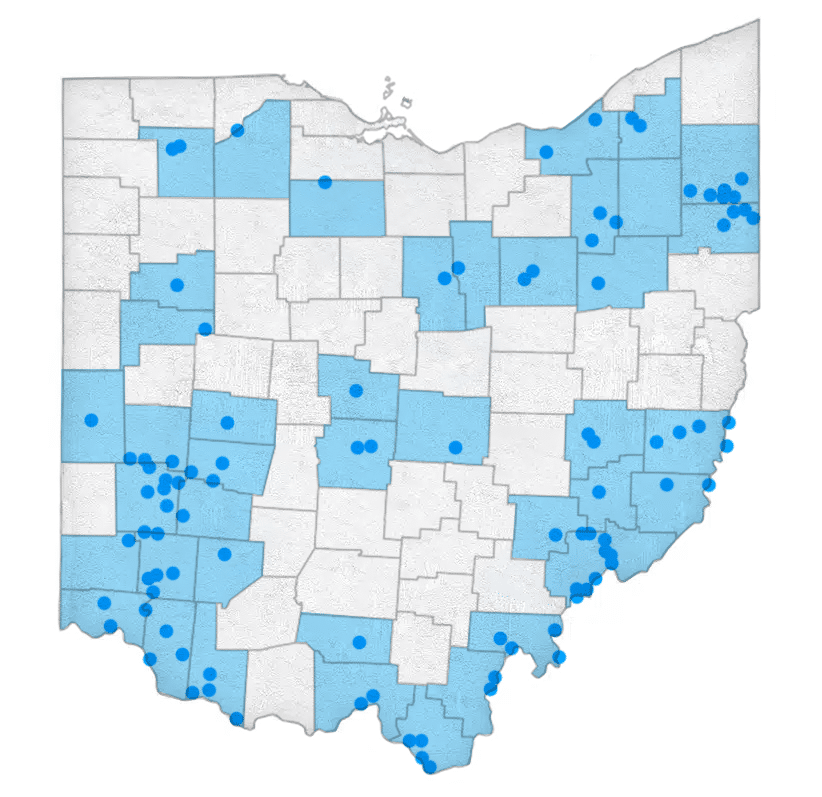
In addition to these well-known cases, PFAS have been confirmed above advisory levels in:
Condado de Allen
Condado de Ashland
Condado de Auglaize
Condado de Belmont
Condado de Brown
Condado de Butler
Condado de Champaign
Condado de Clark
Condado de Clermont
Condado de Clinton
Condado de Cuyahoga
Condado de Darke
Condado de Delaware
Condado de Franklin
Condado de Gallia
Condado de Geauga
Condado de Greene
Condado de Guernsey
Condado de Hamilton
Condado de Henry
Condado de Lawrence
Condado de Licking
Condado de Mahoning
Condado de Meigs
Condado de Miami
Condado de Monroe
Condado de Montgomery
Condado de Morgan
Condado de Noble
Condado de Pike
Condado de Portage
Condado de Richland
Condado de Scioto
Condado de Seneca
Condado de Stark
Condado de Summit
Condado de Trumbull
Condado de Warren
Condado de Washington
Condado de Wayne
Condado de Wood
These areas join a growing list of Ohio communities where PFAS exposure is no longer just a possibility. If your city, county, or even military community has been impacted by PFAS contamination, you may have legal options. Contact KNR today.
Contaminated Water Health Risks: Why are PFAS Dangerous?
PFAS build up in the human body over time, leading to cancers, thyroid disease, immune disorders, and reproductive problems.
PFAS Exposure & Serious Health Conditions
The biggest danger with PFAS is that they don’t leave the body once they enter it. These chemicals bind to proteins in the blood and organs, slowly accumulating over time. Unlike many toxins that the body can flush out, PFAS remain in the bloodstream and tissues for years, which is why they’re called “forever chemicals.”
Even small amounts of PFAS consumed regularly through drinking water can build up and eventually trigger life-altering illnesses. Communities across Ohio, including those near Dayton’s Miami Wellfield and along the Ohio River, have already seen increased health concerns tied to long-term exposure.
What are the Symptoms of PFAS Exposure?
One of the most frustrating aspects of PFAS exposure is that symptoms can appear slowly, sometimes years after the initial exposure. Ohioans may not realize their water is contaminated until serious health issues arise.
Typical symptoms and conditions linked to PFAS exposure:
Persistent fatigue or weakness
High cholesterol or unexplained changes in bloodwork
Changes in thyroid function (weight fluctuation, hair loss, mood swings)
Immune system issues, including reduced vaccine effectiveness
If you’ve experienced these symptoms and lived in an area with reported PFAS contamination, it may be time to seek medical care and consult a lawyer.
Illnesses Linked to PFAS
Research by the U.S. Environmental Protection Agency (EPA), the World Health Organization (WHO), and the International Agency for Research on Cancer (IARC) has established strong links between PFAS exposure and multiple serious conditions:
Kidney Cancer – Elevated PFAS levels have been consistently associated with higher rates of renal cell carcinoma. Individuals exposed through contaminated water sources often show an increased risk of kidney tumors and chronic kidney disease.
Thyroid Cancer & Thyroid Disease – PFAS disrupt normal hormone regulation, leading to both malignant thyroid cancers and non-cancerous thyroid disorders like hypothyroidism. Women, children, and firefighters exposed to AFFF foam appear especially vulnerable.
Liver Cancer & Liver Damage – PFAS alter liver enzymes, cause fatty liver disease, and significantly raise the risk of hepatocellular carcinoma. Studies show abnormal enzyme markers in people living near PFAS-contaminated water supplies.
Testicular Cancer – Communities with known PFAS contamination, including those near military bases, report significantly higher rates of testicular cancer. This cancer is one of the strongest scientifically supported PFAS-related illnesses.
Ulcerative Colitis & Immune Disorders – PFAS weaken the immune system and increase the risk of autoimmune conditions, such as ulcerative colitis where surgery is deemed necessary. They have also been shown to reduce vaccine effectiveness in children, leaving them more vulnerable to infections.
Is Your Diagnosis Related to PFAS in Ohio’s Water?
Many Ohio residents don’t immediately connect a cancer or thyroid diagnosis to contaminated drinking water. But when entire neighborhoods see unusual rates of kidney cancer, thyroid disease, or autoimmune disorders, the connection becomes hard to ignore.
If you or a loved one has been diagnosed with a serious illness and lives in an area with known PFAS contamination, it’s important not to wait. Speaking with an experienced PFAS water contamination lawyer can help you understand your rights and whether your diagnosis may be tied to toxic exposure.
Are You Eligible For an Ohio PFAS Water Contamination Lawsuit?
Not everyone exposed to contaminated water will qualify for a lawsuit, but if you or your family lived, worked, or served in Ohio, you may be eligible. The key factors are where you lived, how long you were exposed, and your diagnosis.
PFAS Claim: General Eligibility Requirements
Duration of Exposure: Most cases require at least one year of residence (or six months if you were stationed at a military base).
Medical Diagnosis: You must have been diagnosed with a PFAS-related illness, such as kidney cancer, thyroid disease, testicular cancer, liver cancer, or ulcerative colitis requiring surgery.
Proof of Residence/Employment: You’ll need documentation showing you lived, worked, or served in an affected area (utility bills, leases, military records, employment documents).
You May Have a Valid Ohio Water Contamination Lawsuit If:
You lived in Dayton, near Wright-Patterson Air Force Base, in Youngstown near the Air Reserve Station, or around Newark AFB. These bases used firefighting foam for decades, contaminating local groundwater with PFAS at levels thousands of times higher than today’s EPA limits.
You worked with AFFF as either a military or civilian firefighter and were repeatedly exposed to AFFF and later developed kidney cancer, thyroid problems, or testicular cancer, among other illnesses.
Your family relied on a contaminated water system, like those in Dayton, Loveland, Toledo, Pike County, and along the Ohio River, who had been drinking contaminated water for years before testing revealed unsafe levels.
You grew up in a PFAS-affected community. If you drank contaminated water as a child or teen and were later diagnosed with thyroid disease or cancer, you may still have a valid claim.
Documents to Gather Before a Case Review
Water utility notices and annual water quality reports showing PFAS detections or advisories for your system.
Residency records such as utility bills, leases, mortgage statements, or school records placing you in an affected community during the exposure window.
Military or employment records if your exposure came through service or work at an affected site.
Medical records documenting your diagnosis, treatment, and any bloodwork.
A simple timeline of where you lived, when symptoms started, and when you were diagnosed.
PFAS lawsuits are complex, and proving your case requires evidence of both exposure and illness. Fortunately, you don’t have to figure this out on your own. KNR’s mass tort team and class action attorneys will review your records, connect your diagnosis to known contamination in your area, and fight for the maximum compensation you deserve. See how injury damages are calculated.
Toxic Water Liability in Ohio: Who’s Responsible for PFAS Exposure?
Ohio families didn’t put PFAS into their water; corporations, institutions, and agencies did. For decades, companies knew these chemicals were toxic but continued to make, sell, and dump them into rivers, groundwater, and municipal water systems. Today, lawsuits are finally forcing polluters to answer for the harm they caused.
Chemical Companies That Made & Sold PFAS
Some of the largest chemical manufacturers in the world are at the center of PFAS litigation. Internal documents revealed in past lawsuits show that these corporations knew PFAS were toxic, cancer-causing, and long-lasting, yet chose profits over people.
3M – For decades, 3M was one of the primary producers of PFAS, supplying them for firefighting foam (AFFF) and countless consumer goods. In 2023, 3M agreed to a settlement valued at up to $10.3 billion with municipalities across the U.S. to fund cleanup of contaminated water systems.
DuPont – DuPont used PFAS for decades in manufacturing Teflon and other products. The company has faced thousands of lawsuits for water contamination, including high-profile cases in West Virginia and Ohio.
Chemours – A DuPont spin-off, Chemours inherited liability for many PFAS operations. In 2025, a federal judge ordered Chemours to immediately halt illegal PFAS discharges into the Ohio River, underscoring the ongoing risks.
Corteva & Others – Additional corporations remain under scrutiny for their roles in manufacturing and distributing PFAS nationwide.
These companies and others are accused not only of polluting Ohio’s drinking water but also of concealing research that showed PFAS could cause cancer and reproductive harm.
Military & Government Liability for PFAS Use in AFFF Foam
For decades, the U.S. military and airports across Ohio used firefighting foam (AFFF) in training and emergencies, releasing PFAS into soil and groundwater. Communities near these facilities have reported contamination at levels thousands of times above EPA limits. Service members, firefighters, and nearby residents now face cancers and other PFAS-linked illnesses, and courts are beginning to recognize the government’s role in this widespread exposure.
Municipal Negligence for Failing to Protect Residents
While cities didn’t manufacture PFAS, some water utilities are being sued for failing to act after contamination was detected. Allegations include delayed testing, ignoring the need for filtration systems, and not warning residents quickly. These failures left families drinking unsafe water for years longer than necessary, increasing the health risks and strengthening claims of municipal negligence. In Ohio, utilities now face added pressure to test for and treat PFAS as the EPA’s 4 ppt limits for PFOA and PFOS take effect, and delays in meeting those standards can become evidence in a claim.
How to Hold Parties Accountable for Contaminated Water
Contamination Source – Proof that PFAS in your water supply came from a specific manufacturer, military site, or utility failure.
Exposure – Evidence that you lived, worked, or served in the area where the contamination occurred (utility bills, lease agreements, military service records, employment records).
Medical Diagnosis – Documentation of a PFAS-linked illness such as kidney cancer, thyroid disease, testicular cancer, or ulcerative colitis requiring surgery.
Causation – Expert testimony connecting your illness to PFAS exposure in your community’s water supply.
Damages – Proof of the harm caused, including medical bills, lost wages, pain and suffering, or wrongful death damages.
What Evidence of PFAS Exposure is Used to Prove Your Case?
Successful claims require proving three things: your diagnosis, exposure to contaminated water, and the link between the two.
Filing an Ohio PFAS water contamination lawsuit isn’t as simple as pointing to polluted water. Courts and defense attorneys will demand clear proof connecting your illness to your exposure. That’s why gathering strong evidence is the most important step in your case, and why having experienced legal help matters.
Evidence You’ll Need to Prove a PFAS Water Contamination Claim
Medical Records – Diagnosis of PFAS-linked illnesses (kidney, thyroid, liver, testicular cancers, ulcerative colitis related surgery), plus lab work showing PFAS levels or abnormal enzymes.
Proof of Residence/Employment – Utility bills, leases, school or work records showing you lived or worked in a contaminated Ohio community.
Military Records – Duty logs, housing assignments, or service files connecting you to bases like Wright-Patterson AFB, Youngstown, or Newark where AFFF was used.
Environmental Reports – EPA data, Ohio PFAS Action Plan results, or municipal notices confirming contamination in your water supply.
Expert Testimony – Medical experts linking your illness to PFAS; environmental experts showing how toxins traveled into your water.
Personal Impact Statements – How illness affected your work, finances, health, or daily life, critical for showing damages beyond medical bills.
The best way to test the strength of your claim and gather the evidence your claim needs to recover compensation is to speak with an experienced lawyer as soon as possible after your diagnosis. Call KNR to review your case for free.
Compensation in Ohio for PFAS Exposure & Water Contamination
If you’ve been diagnosed with a serious illness after years of drinking contaminated water, compensation can make a life-changing difference. While no amount of money can undo the harm, PFAS settlements are designed to cover the medical, financial, and personal losses families face.
Current PFAS Water Contamination Settlements
Many of the previously discussed water contamination lawsuits across the U.S. have already led to significant payouts:
3M (2023): A settlement valued at up to $10.3 billion to help municipalities clean PFAS from public water systems.
DuPont & Chemours: Paid hundreds of millions to resolve lawsuits tied to decades of chemical dumping.
It is important to understand that these large public-water settlements compensate cities and utilities for cleanup costs. They are separate from the individual personal-injury claims that people diagnosed with PFAS-related illnesses may bring. These lawsuits typically use a tiered system, with higher payouts for the most serious illnesses (kidney, testicular, liver, thyroid cancers) and lower, but still significant, awards for conditions like thyroid disease.
What Is My PFAS Contamination Lawsuit Worth?
Every case is unique, but most Ohio PFAS settlements fall somewhere between tens of thousands and several hundred thousand dollars. The exact value depends on:
Your diagnosis – Severe cancers and long-term conditions often receive higher compensation.
Length of exposure – Living or working in a contaminated area for years strengthens your case.
Impact on your life – Lost wages, future medical care, pain, suffering, and family hardship all increase damages.
Proof and documentation – Strong evidence of exposure and illness helps maximize recovery.
Compensation for Damages Related to PFAS Exposure
Current and future medical bills
Lost income and reduced earning capacity
Long-term or palliative care
Pain, suffering, and emotional distress
Funeral expenses in wrongful death cases
Because these cases involve complex science, legal strategy, and long-term damages, it’s critical to work with experienced attorneys who know how to calculate the full value of your claim now and in the future. Insurance companies and chemical giants will always try to minimize payouts. KNR’s water contamination class action attorneys make sure you aren’t shortchanged.
Water contamination cases aren’t simple injury claims. They’re battles against billion-dollar chemical corporations, the military, and utilities with deep pockets and powerful defense teams. To succeed, you need a firm with real trial experience, proven results, and the resources to go toe-to-toe with polluters.
At KNR, we deliver:
Real Trial Experience – We don’t just settle; we prepare every case for court and go to trial when necessary. Our attorneys know how to present complex cases and win.
Millions Recovered for Ohioans – KNR has a long track record of results in mass torts and complex injury claims, securing millions for clients harmed by negligence and corporate misconduct. See our case results.
Aggressive, Relentless Representation – Polluters don’t give up easily, and neither do we. From filing claims to cross-examining experts, we fight to maximize compensation for every client.
Statewide Presence, Local Focus – With offices and cases across Ohio from Cleveland and Toledo to Dayton, Columbus, and the Ohio River Valley, we’re on the ground where PFAS contamination has hit hardest. Connect with our Cleveland injury attorneys or another nearby office.
National Resources, Ohio Commitment – We plug clients into national multidistrict litigation (MDL) when it strengthens their case, but we never lose sight of the Ohio families we serve.
No Fee Unless We Win – We handle the risk. You pay nothing unless we recover compensation on your behalf.
KNR combines the skill to take on chemical giants with the compassion to stand beside Ohio families suffering from contaminated water. Our work also extends to related toxic-exposure cases, such as the Paraquat lawsuit and asbestos and mesothelioma claims.
How Long Do I Have to File a PFAS Lawsuit in Ohio?
Ohio has strict deadlines (statutes of limitations) for toxic exposure claims. These deadlines often run 2 years from the date of diagnosis or when you reasonably should have known your illness was linked to PFAS. Waiting too long can bar your claim, so it’s important to act quickly. Review Ohio’s injury filing deadline.
How Do I Join an Ongoing PFAS Lawsuit?
Many Ohio cases are part of a national multidistrict litigation (MDL). If you join the lawsuit, KNR can file your claim directly into the MDL, ensuring it’s grouped with similar cases and giving you access to national settlement negotiations while still focusing on your individual recovery.
What Illnesses Are Linked to PFAS Exposure?
The strongest links are to kidney cancer, testicular cancer, thyroid disease, liver cancer, and severe ulcerative colitis where surgery is required. Research also suggests high cholesterol and immune suppression may be connected to long-term exposure.
Who Is Being Sued for PFAS Contamination?
Major defendants include 3M, DuPont, Chemours, Corteva, and other chemical manufacturers. Some cases also target the U.S. military, airports, or local water utilities for failing to act quickly once contamination was detected.
Can I File a PFAS Lawsuit If I No Longer Live in Ohio?
Yes. What matters is where the exposure happened, not where you live today. If you lived, worked, or served in an Ohio community with known PFAS contamination and later developed a related illness, you may still qualify even if you’ve since moved out of state.
Can I File a Claim If My Child Was Harmed by PFAS Water Contamination?
Children are especially vulnerable to PFAS exposure, which can lead to developmental delays, health problems later in life, and certain cancers. Parents may file on behalf of minors, and adult children who developed illnesses after childhood exposure may also have claims.
Can I Sue If I Was Exposed to PFAS in the Military?
Service members and civilian workers stationed at bases like Wright-Patterson AFB, Youngstown Air Reserve Station, and Newark AFB were often exposed to firefighting foam containing PFAS. While lawsuits against the federal government are complex, many veterans have valid claims against the companies that made and sold the foam and in some cases against military contractors.
Can My Family File If a Loved One Passed Away?
Yes. If a family member died from cancer or another PFAS-related illness, surviving spouses, children, or estates may pursue wrongful death claims for funeral expenses, loss of income, and loss of companionship.
Will I Have to Go to Court if I Sue for Water Contamination?
Most PFAS lawsuits settle before trial, but some cases may go to court. If that happens, KNR will be with you every step of the way. We handle the legal fight while you focus on your health and family.
How Long Does a PFAS Lawsuit Take?
It depends. Some settlements may happen within 1 to 2 years, while larger MDL cases can take longer. KNR keeps you updated at every stage and fights to get compensation as quickly as possible.
How Much Does It Cost to Hire KNR?
There’s no upfront cost to file a PFAS lawsuit with KNR. We work on a contingency fee basis, which means you pay nothing unless we recover compensation for you.
What are the EPA’s PFAS Limits for Drinking Water in Ohio?
In April 2024, the U.S. EPA finalized its first enforceable national drinking water limits for PFAS, setting a maximum contaminant level of 4 parts per trillion each for PFOA and PFOS. Those 4 ppt limits remain in place, and in May 2026 the EPA proposed extending the compliance deadline for water systems from April 2029 to April 2031; the proposal was not final as of August 2026. Ohio water systems must test for these chemicals and install treatment to meet the standard, and Ohio also follows EPA health advisories for other PFAS compounds.
Which Ohio Cities and Counties Have Reported PFAS Water Contamination?
PFAS have been detected above advisory levels in cities including Dayton, Loveland, and Toledo, in the Ohio River Valley, and near military sites such as Wright-Patterson Air Force Base, Youngstown Air Reserve Station, and Newark Air Force Base. Contamination has also been confirmed across dozens of Ohio counties, including Cuyahoga, Franklin, Hamilton, Montgomery, Stark, Summit, Trumbull, and Mahoning. If your community appears on Ohio’s PFAS testing list, you may have legal options.
How Do I Find Out if My Water System Tested Positive for PFAS?
Start with your water utility’s annual water quality report, sometimes called a Consumer Confidence Report, which lists detected contaminants and is mailed or posted online each year. Ohio EPA also publishes PFAS sampling results for public water systems from its statewide testing program, and your utility must notify customers when a result exceeds a standard. If you use a private well near a military base or industrial site, ask the county health department about testing. Bring whatever results or notices you find to your case review; they are exactly the kind of evidence that supports a claim.
Is Your Illness Linked to PFAS in Contaminated Water? Call KNR Today
PFAS water contamination has left too many Ohio families like yours carrying the weight of serious illnesses, lost income, and mounting medical bills. You didn’t choose this exposure and should not have to deal with the harm and hassle alone.
KNR’s experienced legal team is here to help hold the right parties accountable for putting forever chemicals in Ohio’s water supply, seek justice for the harm they inflicted, and recover the maximum compensation you deserve. With offices statewide and millions recovered for injury victims across Ohio, we are here and ready to help.
Questions about PFAS and contaminated water? Call KNR 1-800-HURT-NOW or submit a request for a free case review. We’ll review your situation and discuss all your options. There’s no fee unless we win.
¿Qué hace que KNR sea especial?
Llevamos más de 20 años prestando servicio en Ohio
Desde nuestra fundación en 2005, Kisling, Nestico & Redick se ha dedicado a ayudar a las víctimas de lesiones personales a luchar por la indemnización que se merecen cuando un accidente afecta a su estilo de vida. Hemos ayudado a más de 10 000 personas y estamos dispuestos a seguir luchando por los habitantes de Ohio y por cualquier persona que merezca una indemnización por sus reclamaciones por lesiones personales.
Consultas gratuitas // Disponibles las 24 horas del día, los 7 días de la semana // Si no ganamos, no cobramos