En esta página
When To Take An Ambulance After a Car Crash
The average cost of an ambulance ride rose 22% between 2017 and 2020 to $1,277.
Car crashes are traumatic. You’ll likely have medical costs and property damage to cover, and dealing with an ambulance bill might seem like too much. But if another driver’s negligent behavior caused the crash that injured you, you could recover the expenses needed to pay for your ambulance ride, a ride that could save you trouble in the long run.
Kisling, Nestico & Redick are ready to hear your case after you’ve been injured in an Ohio car crash. Our car accident attorneys have been helping clients in similar cases get compensation for years. Get started with a free consultation. Call 1-800-HURT-NOW.
Is an Ambulance Ride Necessary after a Car Accident?
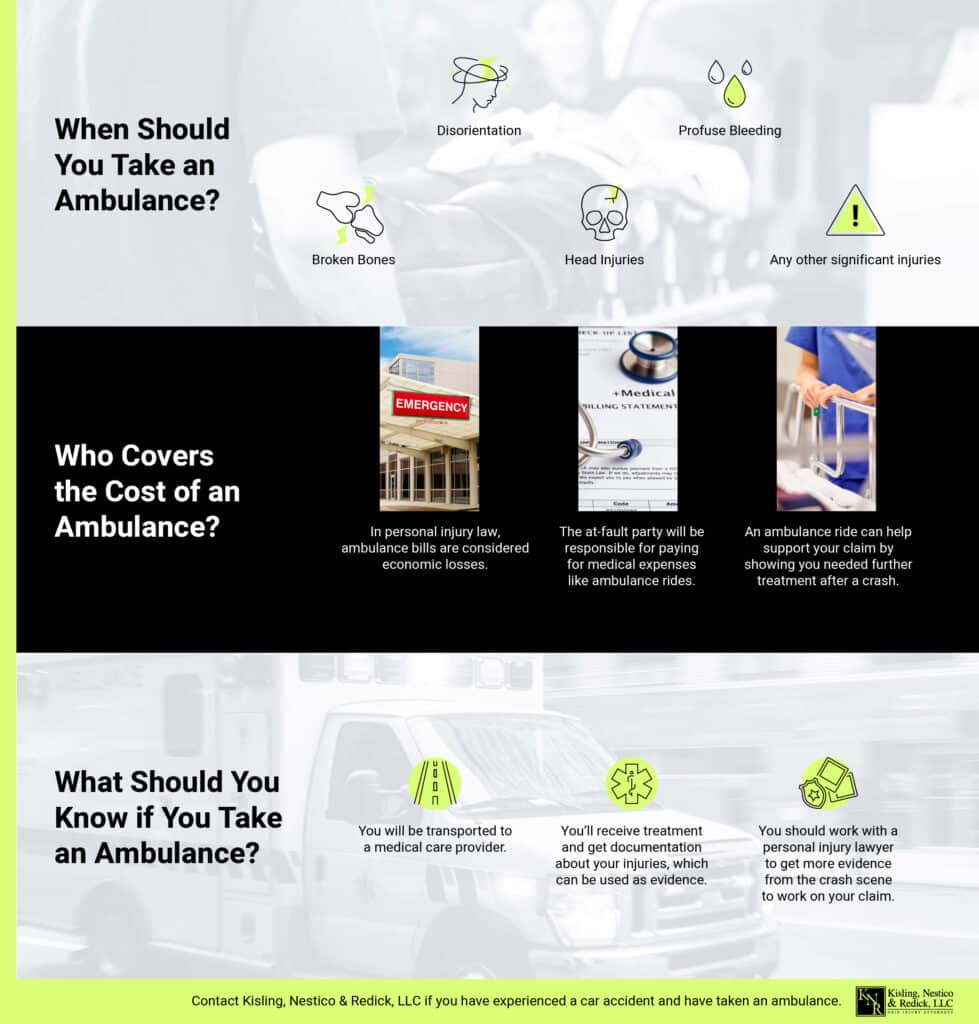
It’s not common knowledge, but refusing a ride to a hospital or treatment center is an option after a car crash. Whether that’s the right call is up to you, but it’s easy to get confused in the aftermath of a collision.
There are many things to take care of: answering questions from responding law enforcement, getting evidence from the scene, taking care of any loved ones or pets in your car, and being examined by paramedics.
You’ll have to decide whether to ride in the ambulance. There could be instances where you might not have a choice, like if knocked unconscious. But how do you decide if you need the ride?
How Serious Are Your Injuries?
Paramedics and Emergency Medical Technicians can guide your decision to ride in an ambulance, but the severity of your injuries will play a big part.
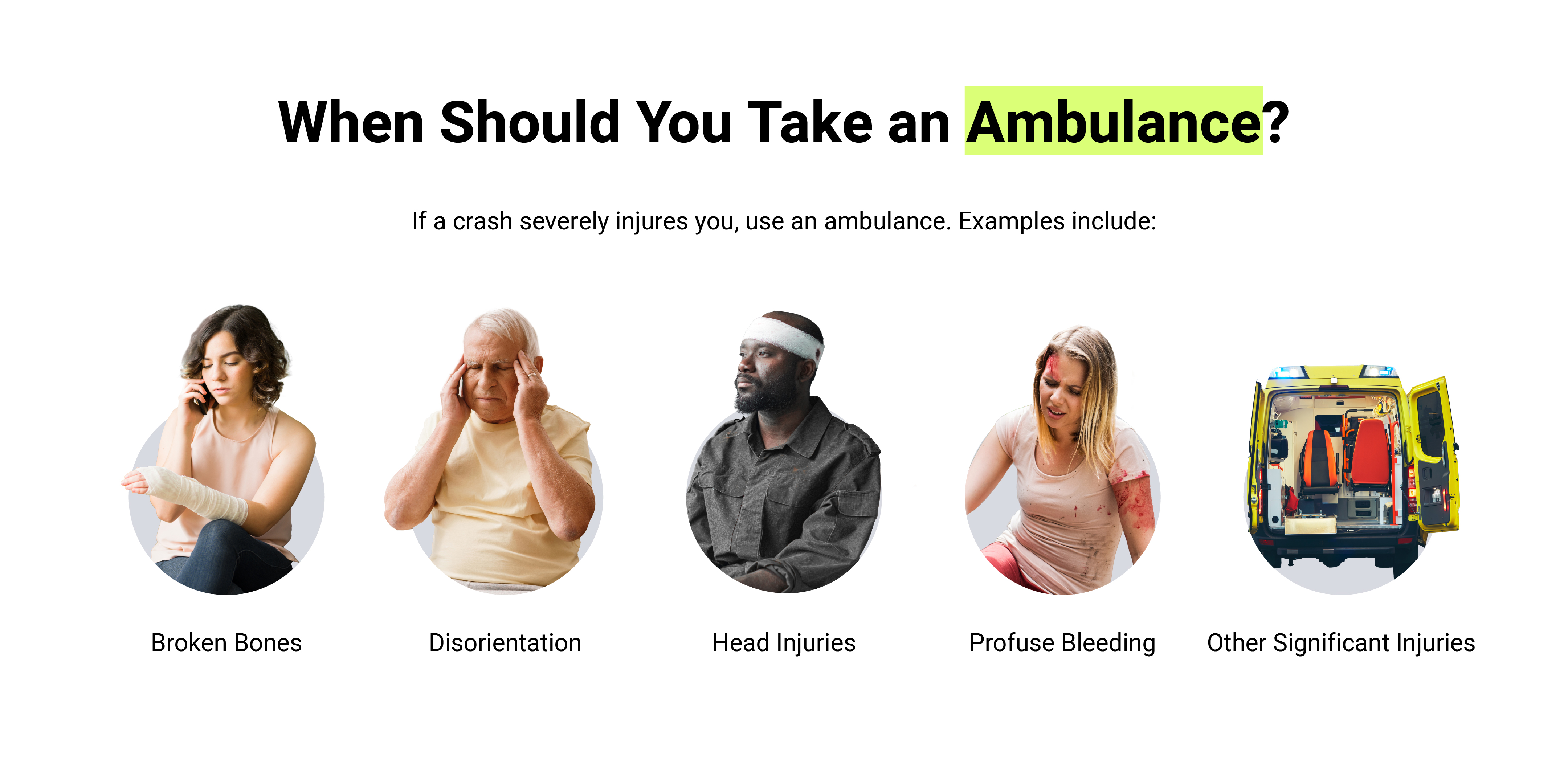
Life-threatening injuries are usually significant factors in emergency transportation to a hospital or emergency room. Examples of serious injuries include:
- Huesos rotos
- Quemaduras
- Difficulty breathing
- Difficulty speaking or responding to questions
- Feeling dizzy or disoriented
- Head injuries
- Loss of consciousness
- Convulsiones
- Severe pain
- Uncontrollable bleeding
- Any other significant injury
Listen to the Paramedics
When paramedics arrive at a crash, they look at how many people were injured in the crash, check their conditions, then decide how to treat them.
They’ve been trained to know when someone needs emergency care. When they evaluate, they can determine if there are any “invisible” injuries or if you’d get a more accurate evaluation at an emergency room.
What Are Invisible Injuries after a Car Crash?
Sometimes the damage after a car accident can take a while to manifest. You might initially feel slight discomfort and refuse an evaluation, but those injuries could become apparent in the days and weeks after the crash.
Your insurance claim could be weakened if you don’t get your injuries diagnosed and treated. Some invisible injuries include:
- Lesiones cerebrales traumáticas (LCT)
- Lesiones medulares
- Cognitive Impairment
- Short- or long-term memory loss
- Psychological injuries
Some of these are soft tissue injuries and could be challenging to diagnose without specialized equipment. Their symptoms become obvious after a few days, and you could suffer extensive damage before you realize it.
What if I Choose Not to Take an Ambulance?
If you choose not to receive an evaluation or a ride to the hospital from the scene of a crash someone else caused, still seek medical treatment. You need to identify your injuries, get them treated, and work on improving your health quickly. Waiting too long to get treatment can hurt your claim.
Insurance companies look to avoid payouts as much as possible. If you don’t identify your injuries or seek treatment as soon as possible, an insurance company could use that to argue your case isn’t that urgent. They might say the crash didn’t cause your injuries. They could also argue that your injuries aren’t that severe.

¿Tienes un caso? Solicita hoy mismo tu evaluación 100 % gratuita